
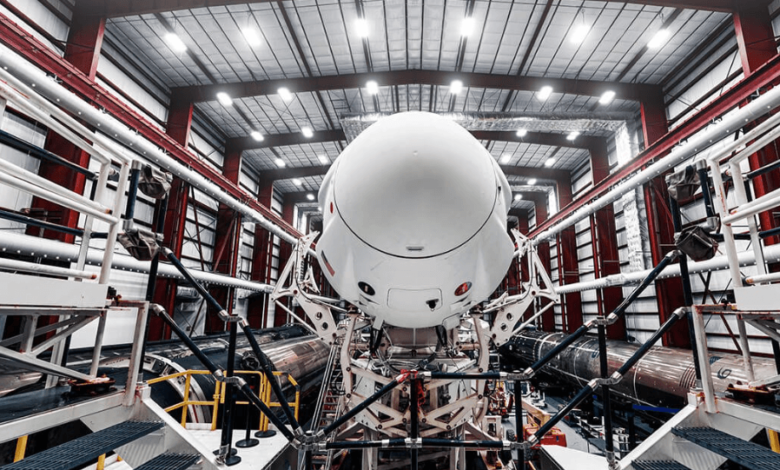
The landscape of space exploration in 2025 is defined by significant technological advancements. Innovations in propulsion, materials, and autonomous systems are transforming operational capabilities beyond Earth. These developments promise to extend mission durations and expand reach into the solar system. As these technologies mature, they will reshape strategies for exploration and resource utilization, raising questions about the full scope of future human and robotic presence in space.
Advancements in Spacecraft Propulsion Systems
How have recent developments in propulsion technology transformed the capabilities of spacecraft? Innovations like ion drive and plasma propulsion have significantly increased efficiency and endurance, enabling prolonged deep-space missions.
These systems utilize electromagnetic fields to accelerate ions, providing continuous thrust with minimal fuel consumption, thereby expanding operational freedom and exploration reach in the vastness of space.
Breakthroughs in AI and Robotics for Space Missions
Recent breakthroughs in artificial intelligence and robotics have markedly enhanced the autonomy, precision, and reliability of space mission operations. AI integration facilitates advanced decision-making and adaptive responses.
Meanwhile, robotic autonomy enables complex task execution without human intervention. These innovations optimize mission efficiency, reduce risks, and expand operational scope.
Together, these advancements are empowering space exploration with increased independence and resilience.
Innovations in Spacecraft Materials and Design
Advancements in AI and robotics have underscored the importance of developing spacecraft with enhanced materials and optimized structural designs to meet the rigorous demands of space environments.
Innovations include lightweight composites for structural efficiency and advanced thermal shielding to withstand extreme temperature fluctuations, enabling durable, resource-efficient craft capable of extended missions and increased operational autonomy.
Future Missions and Exploration Strategies
What are the key strategic considerations shaping the future of space exploration missions?
Priorities include enabling Mars colonization through sustainable life support systems and propulsion innovations.
Additionally, asteroid mining is a focus to secure extraterrestrial resources.
These strategies emphasize autonomous operations, international collaboration, and adaptable exploration frameworks.
They facilitate autonomous resource utilization and expand human presence beyond Earth’s orbit with maximum operational freedom.
Conclusion
In 2025, technological innovations such as advanced propulsion, autonomous AI, and durable materials are transforming space exploration, enabling longer, more sustainable missions beyond Earth. Critics may argue these advancements are costly; however, visualizing a spacecraft utilizing plasma engines, reinforced composites, and intelligent robotics illustrates operational efficiency and resilience. Such integration promises expanded human presence on Mars and asteroid mining, ultimately fostering a new era of scientifically and economically transformative space endeavors.